Agenda
- Welcome
- Syllabus
- Coursebook, Readings & Problems
My coordinates
-
pronouns: he/him
-
what to call me: you choose, e.g. “Jamie”, “Prof. Baxter”
-
email: jamie.baxter@dal.ca
-
office: Weldon 326
Property in its Historical Context
Property = “respected relationships between people with regard to land and sometimes to other ’things’.”
What is this course about?
Two key questions:
-
How has property contributed to “making” Canada?
-
How can we remake property relations to address/redress harm and advance equity and justice?
Course Syllabus
-
Communications (from and with me)
-
Course materials (open online coursebook)
-
Class meetings (screencast, recordings, unit format)
-
Slides (webslides.baxterlab.ca)
-
Evaluation (in-class exams)
Brightspace communications
-
All class e-mails posted via Brightspace announcements
-
Enable announcement alerts to email
-
You’ll been deemed to have read all announcements sent after today
E-mail communications
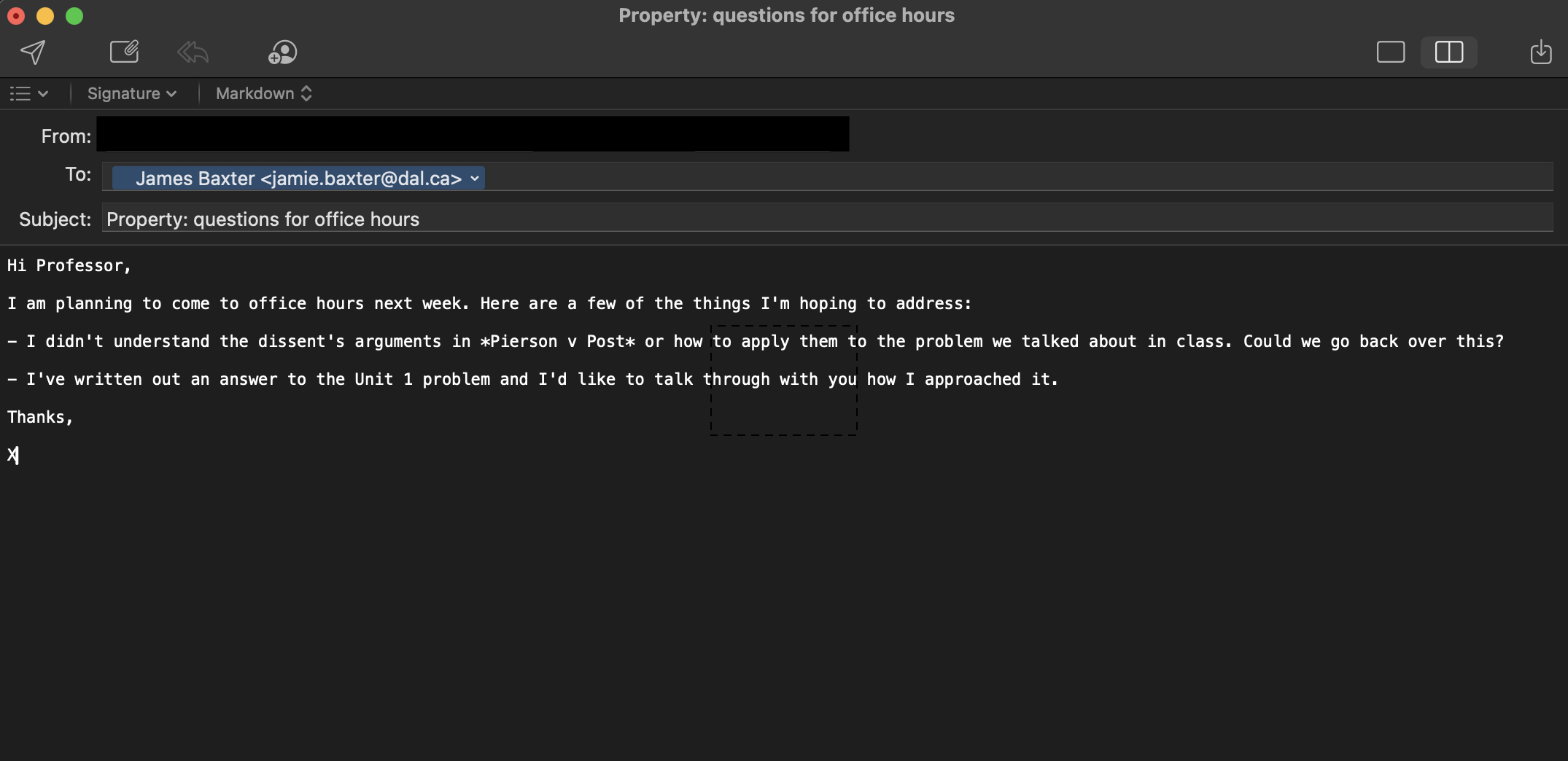
E-mail communications
-
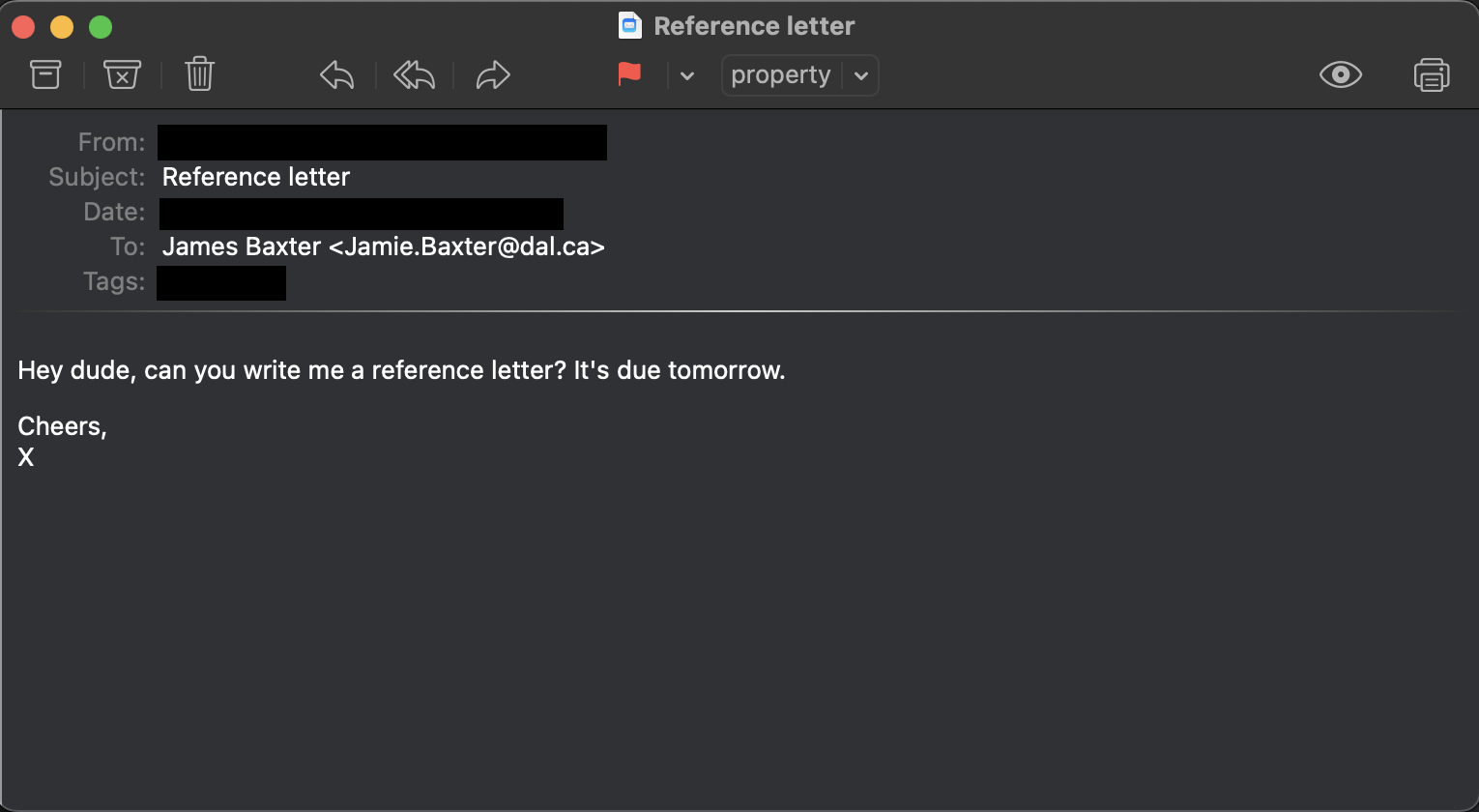
No substantive questions about the course via e-mail
-
Please e-mail me at least 1 hour in advance of scheduled office hours with questions (Mon 12:30-1:30PM)
E-mail communications
Course materials
-
Coursebook: property.opensourcelaw.ca
-
Supplemental readings on Brightspace (if needed)
Class meetings
-
Designed for in-person learning
-
All meetings screencast and recorded via Teams (“second-best hybrid” model)
-
Recordings available to students with accommodations
-
No student-initiated recordings; if you are unable to attend in person or online e-mail me for access
-
Reading materials assigned in “units” (~2 weeks = 4 classes)
Slides
-
Web-based slides for structure and focus
-
Available “live” and after class online
-
Finalized at the end of each unit
Evaluation
-
In-person exams (December and April)
-
December fail-safe
How to Use the Coursebook
Organization of the Coursebook
-
Course material is divided eight Course Units (four per term). Each unit includes a Lesson Plan, Problem and the assigned reading materials
-
Each lesson plan addresses a specific historical period, organized chronologically
-
Readings for each course unit connect legal materials from a number of different legla topics (“doctrines”)
-
Problems ask you to apply the materials studied in that unit (and the preceding ones)
-
Reading Links help you to understand specific relationships between the reading materials
-
As you advance in the course, you’ll also find it helpful to view the materials organized by legal doctrine
Why is the coursebook organized this way?
-
Most first year law school courses are organized by legal doctrine
-
Studying a subject like property in doctrinal silos helps you to understand legal rules and principles, but not how those doctrines are connected to each other in a historical context
-
A digital coursebook allows us to combines these approaches (doctrinal and historical)
Some key ideas to keep in mind…
-
Assigned materials are all required, but there are several ways to connect them together.
-
Class meetings will be “problem first”: use the problems to guide your reading and test your understanding.
-
Place is important in this course: many of the problems, cases and other materials are curated to help you understand property law in the place where we are studying it.
Coursebook User Manual
Use this online guide to understand how to approach your readings and class meeting preparation for each unit.